
ljredux

Antiquity, coding, and obscure french stuff.

The More Things Change…

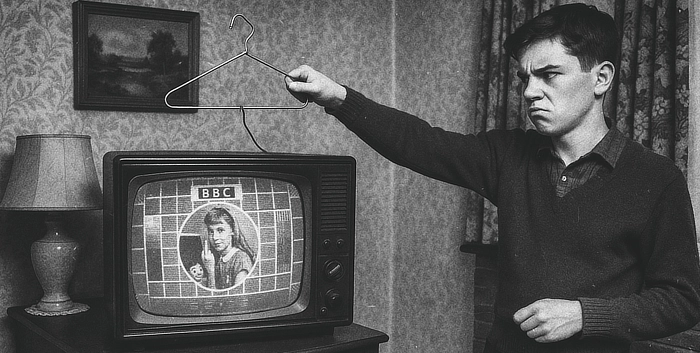
Remember the CRT era? When ‘adjusting the aerial’ sometimes meant balancing on one leg with a coathanger in hand, performing accidental interpretive dance to get rid of the snowstorm on screen?

Well, here we are in 2025, and much has changed… although we’re still waving things around like idiots (laptops or Wi-Fi antennas), chasing elusive bars instead of faint UHF signals.

With most Wi-Fi monitoring apps out there either too slow to update or requiring endless clicking to get live signal info, I just wanted to open a terminal, type wifistr, and get immediate, constant feedback. So I made a console app…
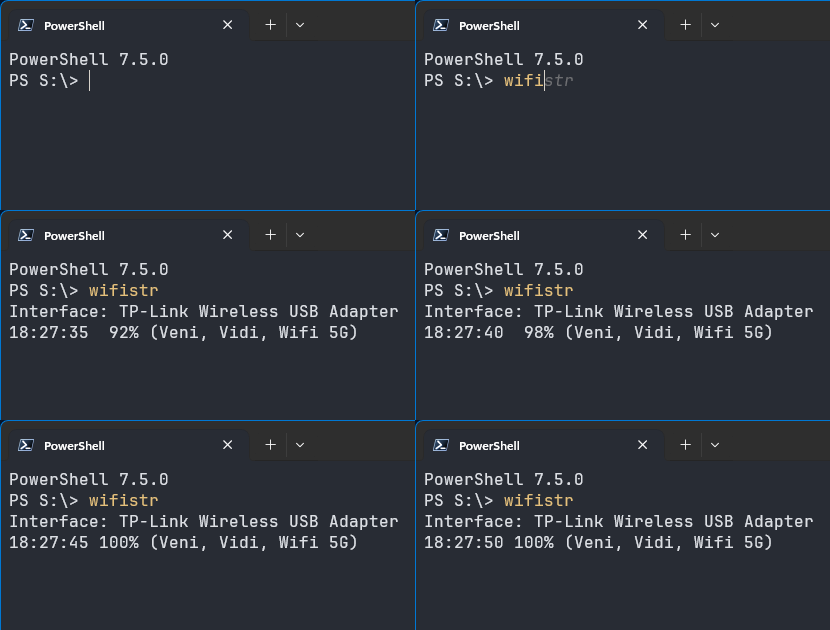
Wifistr running in a Powershell terminal

It works by finding the first connected WLAN adapter and outputting the signal strength every second. I originally used Python for this task, but the script kept breaking with random Python updates and Microsoft’s occasional changes to the netsh output format. An exe which utilises the Windows API shouldn’t have this problem.

Visit the repo, vet the code and compile it yourself, or download the exe, stick it in your Windows path, and call it when needed.

No Skip Button? No Problem

2024-10-13 Internet ljredux

When Google burst onto the scene in the late 90s, its search portal stood out for its simplicity: Just a clean, white page with a logo, a search box, and two buttons. In an ecosystem overwhelmed by ad-heavy portals like Yahoo, Lycos, and Excite, this straightforward, no-nonsense approach was a breath of fresh air, playing a significant role in the company’s early success.

It is striking how much the tables have turned. How a forward-thinking company with such a focus on minimalism and innovation, has transformed one of its key acquisitions (a once cool and disruptive video platform that was devoid of ads) into the most hostile ads vs ad-blockers arm race the internet has ever seen.

I’m talking about YouTube of course, and the latest rumour (denied by Google) suggests the button for skipping ads is sometimes being hidden. The heated reactions raise an interesting question: Why don’t more users create an in-browser skip button themselves?

All mainstream desktop browsers allow us to create bookmarklets (a bookmark which runs javascript on the loaded page), and all HTML5 <video> elements can be manipulated with javascript. This means we can skip to the end of any HTML5 video we like (for now at least) whether YouTube provides a skip button or not.

javascript:(function() { 
    const video = document.querySelector('video'); 
    if (video) { video.currentTime = video.duration; }
})();
Continue reading